
Reading Program
If you have a little one starting school soon or a child who is still waiting for reading to click, you are not alone. This time of year is when many families look closely at what is and is not working. The good news is that you can choose an approach grounded in evidence that builds skills step by step.
This guide explains what structured literacy is, why systematic synthetic phonics is different from memorising whole words, and how programs like Reading Bees help children move from learning sounds to reading and spelling with confidence.
What structured literacy means, in plain English
Structured literacy is an approach that teaches the building blocks of reading and spelling explicitly, in a clear sequence, with plenty of practice. Lessons are systematic and cumulative, so children learn one small step at a time and apply it in a controlled text before moving on.
You will often hear about the “Big 5”. Here is what they are and how they work together.
- Phonemic awareness: hearing and manipulating the individual sounds in words, such as identifying the first sound in sun or blending s-u-n to make sun.
- Phonics and decoding: mapping sounds to letters and letter groups and using that knowledge to read unfamiliar words.
- Fluency: reading with accuracy, appropriate rate and expression, which frees up attention for meaning.
- Vocabulary: knowing the meaning of words and phrases.
- Comprehension: understanding and making sense of what is read.
An effective program teaches each area in a very specific order, and revisits previous learning so skills stick.
Why systematic synthetic phonics is different
Systematic synthetic phonics teaches children to blend sounds to read words and segment words to spell them. Instruction follows a cumulative scope and sequence, so children only meet words in their readers that use sounds they have already learned. Decodable readers make early reading feel achievable and build confidence quickly.
Common pitfalls to watch for:
- Memorising whole words as shapes rather than sounding them out.
- Predictable texts that rely on pictures and guesswork rather than letters and sounds.
- Jumping around content without a clear sequence, which can overwhelm new learners.
When children rely on memorising and guessing, they often stall as texts get harder. With decodable readers and a clear sequence, they get daily wins and a pathway to fluent reading.
Multisensory routines that help brains remember
Young children learn best when teaching is explicit, engaging and multisensory.
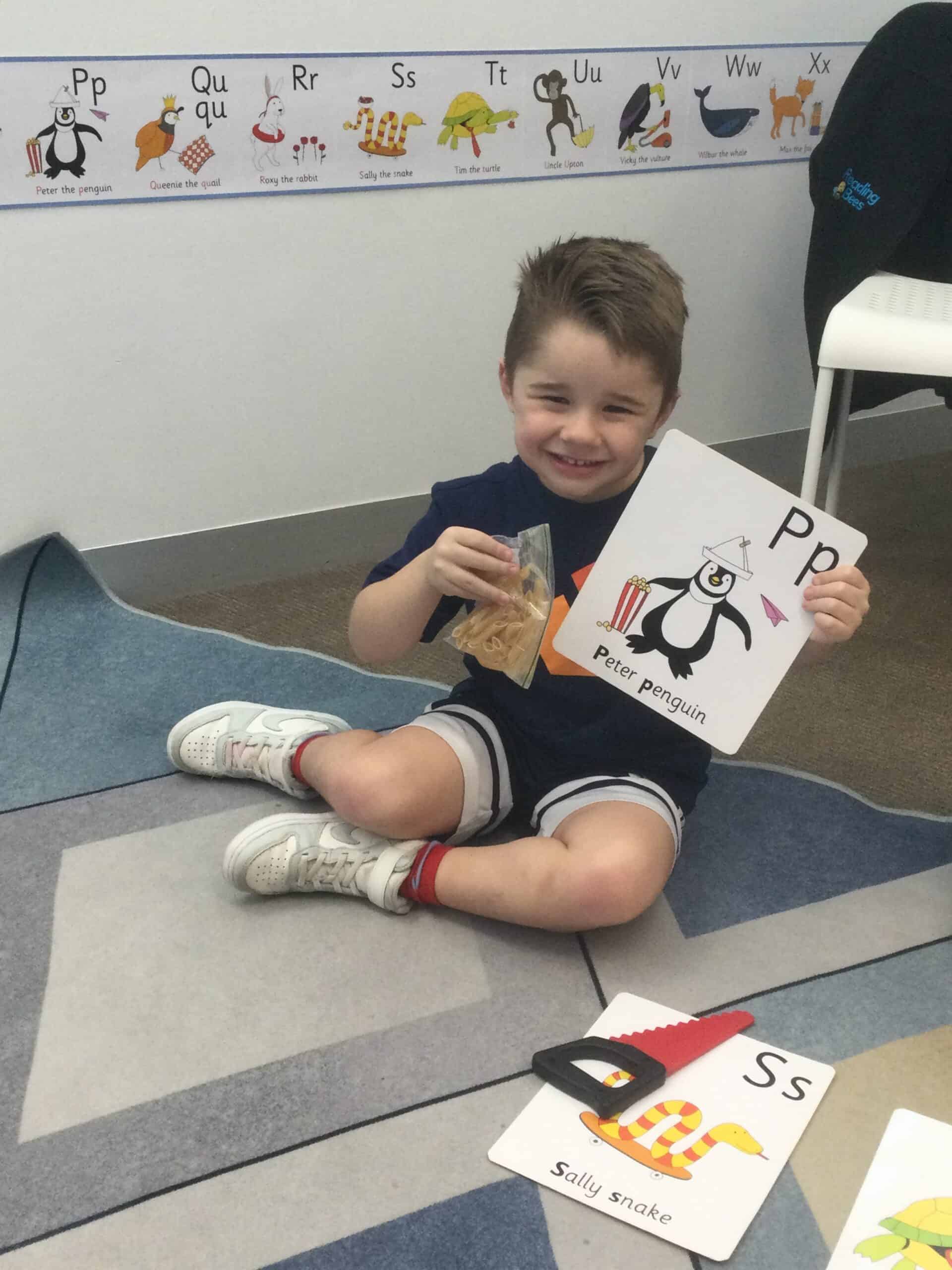
Songs, chants, art, craft and handwriting work together to lock in new learning.
Saying a sound while tracing it, building words with magnetic letters, reading that word in a decodable book and writing it in a sentence gives the brain multiple pathways to retrieve it later.
This approach also supports attention and makes lessons fun.
How Reading Bees aligns with Little Learners Love Literacy
Reading Bees uses a structured, explicit and sequential curriculum aligned with Little Learners Love Literacy. That means:
- A clear order of sounds and skills, building from simple to complex.
- A small set of high-frequency heart words taught explicitly.
- Integrated handwriting so letter formation supports phonics.
- Decodable, colour-coded readers for home practice.
Alignment matters because it brings consistency. What is taught in class is reinforced by what children read at home, and progress builds without gaps.
If you are in Melbourne and looking for an extracurricular learning option, you can explore our classes, including skills-based primary classes and Prep – Year 3 reading classes in South Kingsville, via the classes page on our website.
Pathways by age and stage
Every child’s journey is unique, but a clear pathway helps you choose well.
- PreKinder, age 3+: 60 minutes, up to 10 children with two educators. Focus on listening skills, phonological awareness, first letter-sound knowledge, early pencil control and classroom routines. Great for children two years out from school.
- Kinder (Pre-Prep), typically 4 to 5: 75 minutes, up to 12 children with two educators. Systematic phonics for reading and spelling, early maths, routines and confidence.
- Kinder Plus: 75 minutes, up to 12 children with two educators. Ideal for children who completed Kinder at Reading Bees and are ready to extend.
- Primary Program, Prep to Year 3: 45 minutes, maximum 5 students with one educator. Skills-based placement focuses on decoding, fluency, spelling and handwriting. Primary students begin with a short paid screening to ensure the right group.
You can book PreKinder and Kinder free trials and Primary student screenings* in the Reading Bees app.* Due to its structure, free trials are not offered for our primary program.
Class size, session length and why they matter
Small classes allow for targeted feedback and lots of practice.
- PreKinder classes have a maximum of 10 learners with two educators for 60 minutes.
- Kinder and Kinder Plus have up to 12 learners with two educators for 75 minutes.
- Primary groups are intentionally small, with up to five students for 45 minutes, so each child reads, spells and writes multiple times each session.
What can you do at home in 5 minutes?
Short, regular practice makes a real difference. Aim for three mini sessions a week.
- Review the weekly focus sound and two or three words that use it.
- Read the decodable reader together, pointing to each grapheme and blending.
- Practise handwriting for the new letter, saying the sound while writing.
- Spot the focus letter in your environment, such as on signs and labels.
Keep it positive and brief. When in doubt, ask your child’s educator what to focus on this week.
Is phonics taught in Australian schools?
All Australian schools teach phonics, and several states use a Year 1 phonics check. Victoria was the last Australian state to make phonics teaching methods mandatory in 2025. Teaching quality and consistency can vary, which is why some children benefit from additional structured support. A program that is explicit, systematic and cumulative, with decodable readers and frequent practice, typically accelerates progress.
How Reading Bees compares to popular programs
Families often ask whether there is a better program than Hooked on Phonics.
The bigger question is whether a program is structured, cumulative and aligned to classroom instruction.
“Reading Bees is an evidence-based reading program for kids, aligned with Little Learners Love Literacy and delivered by qualified educators in small groups. It combines explicit teaching, a clear scope and sequence, decodable readers and multisensory practice, with local support across Melbourne studios.”
For many families, that combination is more practical and effective than a general at-home kit because it brings expert teaching, ongoing assessment and tailored next steps.
If you are near Templestowe and want a local option, explore our phonics classes in Templestowe at the Reading Bees learning studio to see schedules and availability.
FAQs
- What is the best program to teach a child to read?
The best programs are structured literacy programs using systematic synthetic phonics, explicit instruction, decodable readers and a clear cumulative sequence. Look for small groups, qualified educators and consistent home practice. Reading Bees follows this model and aligns with Little Learners Love Literacy. - Is phonics taught in Australian schools?
Yes, phonics is taught in all Australian state schools, with increasing emphasis on systematic approaches. The intensity and sequence can differ, so some children benefit from additional targeted support. - What are the five indicators of reading skills?
Phonemic awareness, phonics and decoding, fluency, vocabulary and comprehension. Strong programs teach all five explicitly and revisit them over time. - Should a 3-year-old understand phonics instruction?
At three or four, many children can begin learning letter-sound relationships through playful, explicit teaching. They do not need to know everything, but early exposure to sounds and letters helps set them up for Prep. - Is there a better program in Melbourne than Reading Bees?
Rather than one-size-fits-all, prioritise a program with explicit, systematic phonics, decodable readers and ongoing assessment.
A local, educator-led option like Reading Bees often provides the structure, feedback and practice children need to progress.
Next steps
Choosing a program is easier when you know what works.
“Look for structured literacy with systematic synthetic phonics, decodable readers, a clear scope and sequence, and multisensory routines.”
If that sounds like what your child needs, choose your pathway in the Reading Bees app, book a free PreKinder or Kinder trial, or schedule a Primary student screening.
Helpful links on our site: