
If your child finds it hard to sit still, hold a thought, or stay with a book, you are not alone. According to recent studies, around 1 in 20 children have ADHD.
Attention can easily wobble, especially during busy school terms. The good news is that reading development does not depend on long, boring lessons. It depends on understanding your child and finding the right learning structure using small, repeatable steps.
This introductory guide shares practical, attention-friendly strategies you can use at home today, plus how Reading Bees delivers multisensory, structured lessons that can help children with ADHD and other learning needs make steady progress.
Why structured, bite-sized phonics supports ADHD
We know that every child’s learning journey looks different. When you consider children with ADHD, research confirms that direct instruction reduces decision load and helps to increase clarity. Structured literacy does this by teaching one thing at a time, in a predictable order, with plenty of guided practice.
At Reading Bees, this looks like:
- Short exercises and high repetition, so skills transfer to long-term memory.
- Predictable and routine-based, so attention is not spent figuring out what comes next.
- Multisensory, so movement and touch boost focus and recall.
In practice, this looks like short tasks, quick success, and immediate feedback. With comprehensive checks and review, each new step rests on what is already secure.
Attention-friendly tools we use in Reading Bees lessons
Our educators and class assistants build focus through movement, touch, and clear visuals:
- Movement breaks and posture shifts: movement through actions in songs, as well as standing up from the desk to play a reading game, sitting to write or craft, then stretching and swapping.
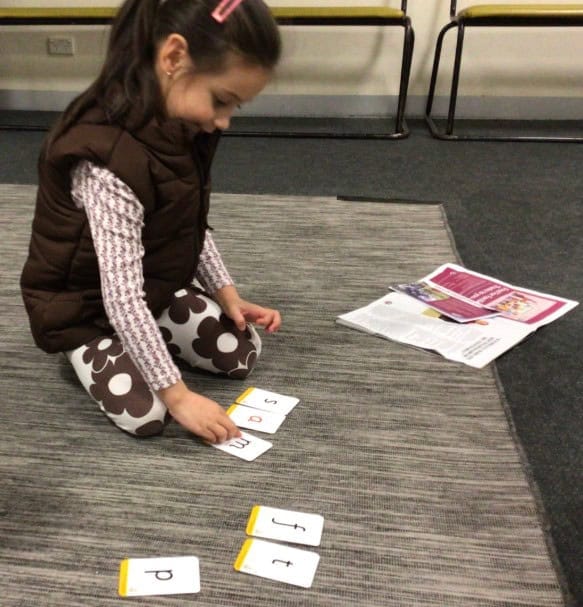
- Tactile tools: finger tracing, crafting and gluing, magnetic tiles, and word building on the mat and whiteboard.
- Visual scaffolds: sound charts, mouth-shape cues, or cued articulation gestures, colour-coded graphemes, and step-by-step blending frames.
- Immediate feedback: quick, specific prompts, and positive reinforcement and praise to keep effort directed.
“Our small groups amplify learning and development. PreKinder and Kinder classes have two educators for classes and are capped at 10-12 students, while Primary groups are capped at five students. This tight ratio helps children re-engage quickly without drawing attention to slips.”

What structured literacy looks like in our lessons
Reading Bees follows systematic synthetic phonics aligned with Little Learners Love Literacy. Children learn sound-letter relationships in a set sequence, read decodable texts that only use taught sounds, and practise handwriting explicitly. Comprehensive checks and frequent, short practice are built into every lesson.
For ADHD learners, this means fewer surprises, clear routines, and quick wins that build motivation.
5-minute practice at home for primary-aged kids
IMPORTANT: This is a guide only, designed for children who have already started school. We wouldn’t expect a three- or four-year-old to manage these activities, even at reduced load. If your school-aged child isn’t ready for this, or hesitates, reduce the load. Use fewer sounds, shorter words, or larger print. Return to yesterday’s step and rebuild confidence before moving forward.
“Short, frequent practice beats long sessions.
Try these micro-routines three times a week if you can.
- Five-minute sprints: set a timer; read a sound ladder, build two words with tiles, write one sentence. Stop at the bell to protect momentum.
- Checklists: a simple card with today’s three steps (sounds, blend, write). Tick as you go.
- Token timers: earn a small token per completed step; swap tokens for a story choice or outdoor play.
- Micro-goals: name 5 target sounds, blend 3 words, or form 3 letters with start points. Finish strong and celebrate effort.
Tier 1, Tier 2, and Tier 3: where programs fit
Schools and clinics often describe support using tiers:
- Tier 1: high-quality classroom instruction for all students.
- Tier 2: small-group, targeted support for students who need extra practice and clearer teaching.
- Tier 3: intensive, often 1:1 intervention for significant or persistent difficulties.
Reading Bees’ small-group Primary classes function like Tier 2, with explicit, cumulative phonics and regular review. Our 1:1 lessons can operate as Tier 3 when a child needs more intensity, closer pacing, or is distressed by reading at home.

When to consider 1:1 lessons
Move to short-term 1:1 if your child shows ongoing distress, stalls across several weeks, or needs rapid catch-up on core code and handwriting. We also use 1:1 when attention variability makes group participation hard. If you’re unsure about choosing 1:1 lessons, speak to your child’s educator or call us to discuss the best fit for your child.
Can this approach help dyslexia too?
Yes. Dyslexia is a neurobiological difference that affects how print is processed. Many children with dyslexia make strong gains with explicit, cumulative phonics, decodable practice, and enough intensity. Progress is individual, and placement matters. Our skills-based Primary screening helps set the right starting point and group.
What to expect as focus and skills build
In the first weeks, look for willingness to try, steadier pacing, and fewer guesses. Next, you will notice more accurate blending, cleaner letter formation, and short stretches of independent reading. Consistency matters more than speed.
Finding a class in your child’s focus window
Classes run Monday to Saturday across eight Melbourne studios. If you can, choose a time that matches your child’s peak attention, such as mid-morning on Saturdays or after a snack on weekdays. You can explore options for South Kingsville, Cranbourne North, Epping, Wantirna, Bentleigh, and more in the Reading Bees app.
Quick FAQ
- What is the best reading program for children with ADHD?
Look for structured literacy with systematic, explicit phonics, small groups, decodable readers, and immediate feedback that helps children feel the wins, no matter how small they might seem. The match between learning structure and your child’s attention window matters more than branding. - Do children with ADHD struggle with phonics?
Some do, but not all. This can be because of lapses of attention interrupting practice. With short, high-repetition teaching, movement, and clear routines, phonics learning typically improves. - What is the first and most important strategy for phonics intervention?
Teach sounds to letters explicitly and in a clear sequence, then rehearse blending and segmenting in brief, frequent bursts with immediate feedback. - Can dyslexics learn to read fluently?
Many can develop functional to strong fluency with explicit instruction, consistent practice, and appropriate intensity. Timelines vary by child. - What is Tier 2 intervention for literacy?
Targeted small-group support that supplements classroom teaching. It uses structured, evidence-based lessons and frequent progress checks.
A gentle next step
We love this website for tips, guides, and more information for thriving with ADHD.
https://www.additudemag.com/how-to-get-kids-to-read-strategies-adhd/
I’ll end by saying again that every child learns at a different pace. Reading Bees might not be the right fit for your child if they need more 1:1 learning support. We encourage every parent to call and speak to us before enrolling.
If you do want support that fits your child’s attention and learning needs, find a class time that matches their focus window in the Reading Bees app. If you feel a short burst of intensity is needed, ask about 1:1 options. Small, steady steps add up. We are here to help you make them feel engaging and fun.