

End‑of‑semester reports can raise real questions. Is my child keeping up? Why is reading still so hard? If you are seeing warning signs, the good news is that there are proven ways to help. Early, targeted support often changes the whole school year.
At Reading Bees, we use evidence-based, explicit instruction to build strong decoding, reading fluency and spelling skills. Our Primary program is designed for Prep to Year 3, with group placement by skill, not age, so children get what they need right now.
This guide explains common profiles of difficulty, what to watch for in the classroom, why structured phonics works, and how our Primary program and simple home routines can make a difference. You will also find a short FAQ answering the most common parent questions.
How struggling readers typically present
Not all reading challenges look the same. Most children who find reading hard fit into one of three broad profiles.
- Word Recognition Difficulties: Children struggle to map sounds to letters, blend sounds to read, and segment to spell. They may know letter names but cannot quickly recall the most common sound for each letter or digraph. Or they may know the letter sounds but struggle to blend them together. Decoding is unsuccessful, or slow and effortful, and they guess words from pictures or first letters.
- Reading Comprehension Difficulties: Children can decode in isolation but read word by word, lose place in lines, and tire quickly. Accuracy may be fine in short bursts, but pace and expression are flat, with somewhat poor comprehension.
- Mixed profiles: Many children show a blend of the above, sometimes with handwriting or spelling weaknesses that compound the load. This displays as poor comprehension due to vocabulary and/or fluency challenges. This can include children with dyslexia, where explicit, cumulative instruction is essential.
Classroom and homework signs to notice
You do not need a formal diagnosis to start helping. Watch for:
- Guessing from pictures instead of sounding out.
- Adding in or substituting words that aren’t on the page
- Letter-sound confusions and letter reversals that persist.
- Fatigue, avoidance, or “I hate reading” comments after short tasks.
- Slow, choppy reading with lost place and limited expression.
- Trouble remembering yesterday’s sounds or patterns without a quick review.
- Spelling that omits sounds or scrambles order, even in familiar words.
If several of these show up, targeted support is warranted now, not later.
What works best for struggling readers
The strongest evidence points to structured literacy. That means:
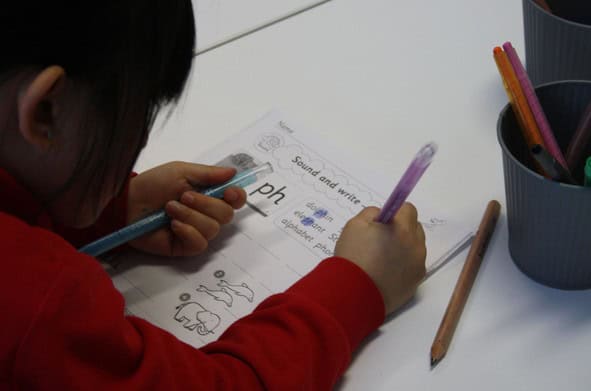
- Systematic, explicit phonics: Teach sound-letter relationships in a clear sequence, practise blending to read and segmenting to spell, and introduce each new pattern only after the previous is secure.
- Decodable practice: Use readers that include only the sounds and patterns already taught. This lets children apply skills and experience success without guessing.
- High-utility “heart words”: Teach a small set of common words with irregular parts, drawing attention to the tricky heart part, while still using phonics where possible.
- Cumulative review: Build in consistent short daily practice that revisits previously taught sounds and words builds automaticity.
- Multisensory routines: Say the sound while writing the letter, build words with magnetic letters, read aloud with tracking, and write short sentences. Multiple pathways strengthen memory.
When instruction aligns with these principles, progress is typically steadier and more measurable than with broad comprehension strategies or predictable texts that encourage guessing.
The Big 5 reading essentials, simply explained
You will often hear about the Big 5 in reading. Effective intervention touches on all five:
- Phonemic awareness, hearing and manipulating sounds in words.
- Phonics, sound-letter relationships and patterns, taught explicitly and sequentially.
- Fluency, accurate, paced, and expressive reading to free up attention.
- Vocabulary, knowing and using a wide range of words.
- Comprehension, making meaning from text through background knowledge and language.
For struggling readers in the early years, phonemic awareness and phonics are the gateway. As decoding becomes automatic, fluency and comprehension grow.
How Reading Bees Primary delivers targeted help
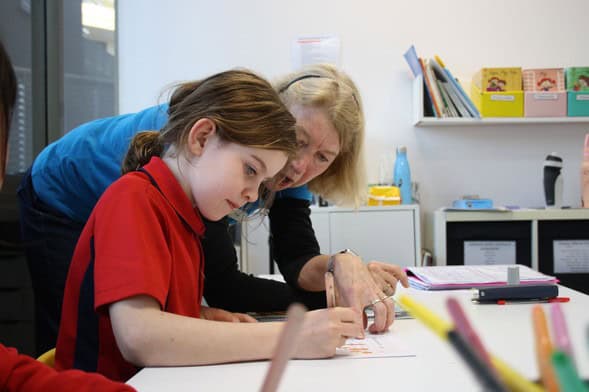
Reading Bees groups students by skill, not age, so they learn precisely at their point of need.
Primary classes:
- Run for 45 minutes with a maximum of 5 students, enabling intensity and individual feedback.
- Follow a structured, sequential scope and sequence aligned with Little Learners Love Literacy resources.
- Integrate decodable readers, cumulative review, and a small set of high-frequency heart words.
- Use multisensory routines so new learning sticks and shows up in reading and spelling.
Every Primary enrolment starts with a short, 20‑minute screening to check letter-sound knowledge, single word decoding, reading fluency and spelling patterns. This places your child accurately so progress can begin straight away. You can book a Primary Student screening in the app for $25 once off cost.
Families in Melbourne’s east looking for skill-based support can explore our Templestowe studio programs, including phonics-led small groups and screenings, on the Templestowe page. It is a good starting point if you are considering a synthetic phonics approach and want a clear picture of the next steps:
- Learn more about Primary reading support at Reading Bees here.
- See Primary class options for the inner west at the classes page.
A simple home plan that actually helps
You do not need hours each night. Consistency wins.
- Three times a week, five minutes: Short, regular practice beats long, infrequent sessions.
- Blending ladders: Write or print quick sound ladders (for example, m‑a‑t then s‑a‑t then s‑i‑t). Slide your finger left to right as your child blends. Keep ladders aligned with taught sounds only.
- Reader routine: Use decodable readers that match current learning. Before reading, review the known sounds, read the book once for accuracy, then again for pace and expression. Celebrate one small win.
- Heart words: Teach one or two high-utility words at a time. Say the regular sounds, then tap the tricky part that must be learned by heart.
- Micro-spelling: Dictate two or three words and one simple sentence using only known sounds. Say the sounds as your child writes.
When to add extra support: If your child is distressed about reading, if home practice stalls, or if progress is flat across several weeks, consider adding 1:1 lessons for a short burst or consider a holiday intensive to lift momentum. Our team can recommend the right mix after the primary student screening.
A supportive note on dyslexia and early action
The Australian Dyslexia Association (ADA) describes dyslexia as a neurobiological language-processing difference that impacts 5% to 10% of the Australian population. It is formally classified in educational and clinical settings as a Specific Learning Disorder (SLD) with impairment in reading. Dyslexia is not a reflection of effort or intelligence. The encouraging news is that explicit, cumulative phonics with decodable practice is the recommended approach for dyslexia, and early action matters. Many children with dyslexia make strong gains with the right instruction, placement and practice.
What to expect as progress builds
In the first few weeks of a targeted program, look for signs of momentum rather than big leaps.
You might notice:
- faster letter-sound recall,
- fewer guesses,
- cleaner blending, and
- short passages that sound smoother.
Over time, these become longer stretches of accurate, paced reading and more consistent spelling choices.
If you would like to understand how our studios run and what structured literacy looks like across ages, you can read more about Reading Bees and our evidence-based approach here:
- Explore our evidence-based reading curriculum overview.
FAQs
What is the best intervention for struggling readers?
Structured literacy with explicit, systematic phonics, decodable practice, and cumulative review. It targets the cause of difficulty, not just the symptoms.
What reading program is best for struggling students?
Programs that follow a clear, cumulative phonics sequence with decodable readers and routine review tend to be most effective. Reading Bees aligns with these principles and places students by skill to ensure fit.
What are the three types of struggling readers?
Broad profiles include phonological and decoding difficulties, fluency and automaticity challenges, and mixed profiles that combine elements of both.
How can I help a child who is struggling to read?
Use short, regular practice with blending ladders, controlled decodable readers, and one or two heart words at a time. If progress stalls, add small-group instruction, a 1:1 boost, or a holiday intensive after a screening.
What are the Big 5 of reading intervention strategies?
Phonological and phonemic awareness, phonics, fluency, vocabulary, and comprehension. Early intervention emphasises the first two while building toward the rest.
Next step
- If your child’s report raised concerns early, targeted support can change the trajectory.
- Book a 20‑minute Primary screening now in the Reading Bees app to place your child accurately and start a plan that fits. The cost is just $25 to start.
- Our engaging and fun studios, small classes and explicit instruction are designed to help children become confident, capable readers.