
A tiny daily habit that adds up to 40 new words by the time school goes back.
The school holidays are coming. Six long, sunny, often-chaotic weeks of kids and pets underfoot, half-finished puzzles, and the slow realisation that you’ve watched Bluey three times before 9am!
If you’re the parent of a pre-schooler, you might also be feeling a small, guilty thought: shouldn’t we be doing something constructive with the holidays? Maybe even something to help them learn?
Here’s the thing. You already are. Every book you read, every song you sing, every chat in the car — that’s language learning. But if you want one tiny, low-effort thing to add to the holiday rhythm, I’d pick this: word of the day.
How to play the word of the day game
The rules are simple.
Each morning, pick a word with your child. It can be from a book you just read, a sign at the park, something they heard at the shops, or a word you’ve suggested from a list on the fridge. (We’ve made one; just scroll down.)
Then, across the day, you both try to use that word.
- At breakfast: “This toast is crunchy.”
- At the park: “Did you hear that crunchy leaf?”
- At dinner: “Let’s see if the carrots are crunchy.”
- Before bed: “Do you remember today’s word?”
That’s it. Five seconds here, five seconds there. No worksheet, no screen, no pressure. If you want to challenge yourself and your child, set a goal at the start of the day: “I bet I can use our word of the day more times than you!” 😉 ☺️
Why it works
Young children learn words through repetition in context. Hearing a word once is not enough. They need to hear it, say it, and use it in different settings before it sticks.
The “word of the day” game bakes that repetition into the day without anyone noticing. By bedtime, your child has heard the word five or six times from you, used it two or three times themselves, and started connecting it to things they can see, taste, and touch.
Do this across a six-week holiday, and your child will have met 40+ new words. In their mouths, not just in their ears.
What makes a good ‘word of the day’
The best words are ones your child can see, do, or feel. Nouns and verbs land fastest at this age. Adjectives work well too, especially the sensory ones.
Good picks for a 3-year-old
Start with nouns and verbs. Here are some to get you started:
puppy, banana, bicycle, butterfly, elephant, artist, person, tickle, squeeze, whisper, crunch, splash, giggle.
Move on to adjectives:
wobbly, sticky, sparkly, slippery, grumpy, cosy, muddy, tiny, enormous.
Avoid:
Words too abstract to picture (honesty, decision, possibility). Save those for when they’re a bit older.
Pair it with Edward the Emu!
If you’re reading along with Sound · it · Out, this month’s book is Edward the Emu, a brilliant one for vocabulary play. Edward wishes he were a different animal, and every page introduces a new creature with a new way of moving, sounding and behaving.
Try pulling your “word of the day” from Edward’s story. Emu. Slither. Roar. Snuggle. Flap. Then act it out together. That’s the game within the game.
A quiet note for worried parents
If you’re reading this and feeling like you should be doing more structured learning at home — stop. Vocabulary is the single strongest predictor of later reading success, and vocabulary is built into conversation, not drills. The more comfortable your child gets, the more talking happens. The more talking happens, the richer the words become.
You don’t have to have flashcards. You need porridge-making chats, car-ride songs, making play scenes together or reading books.
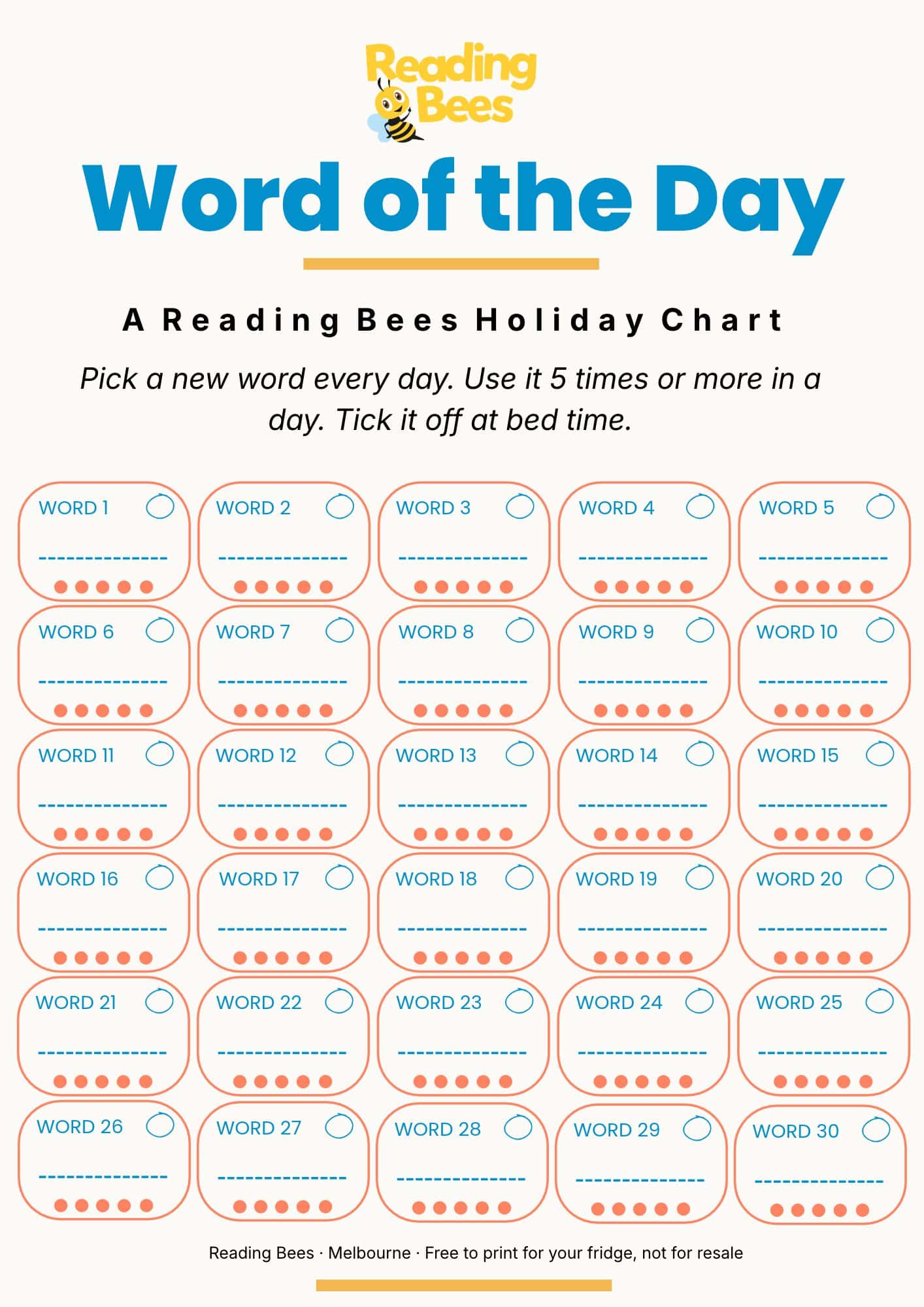
Download the chart
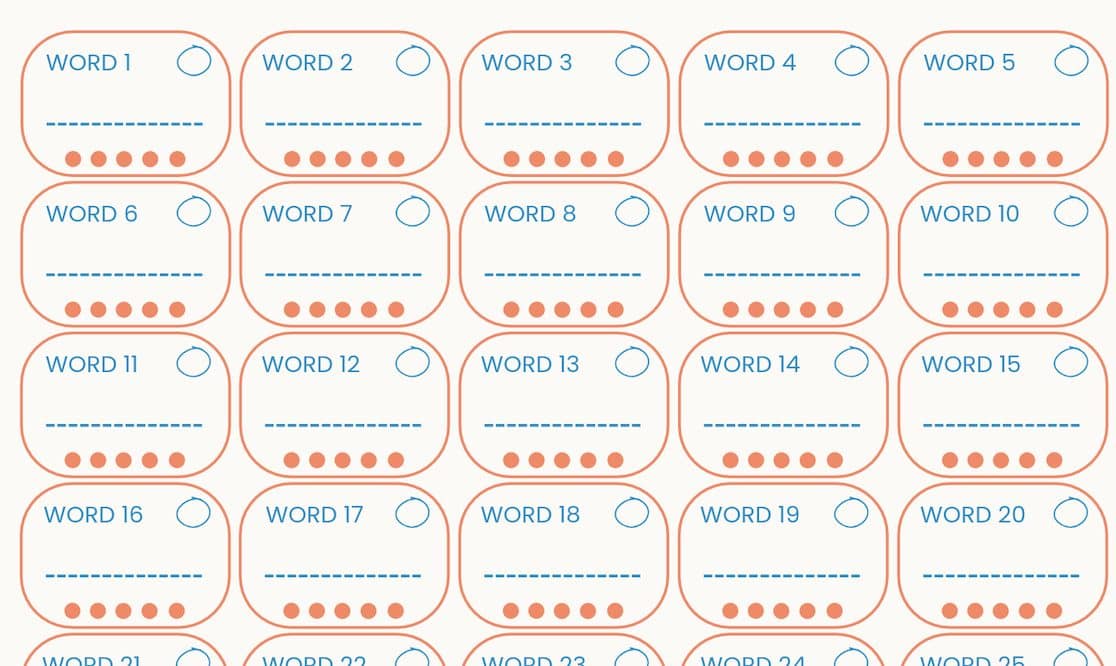
We’ve made a free, printable Word of the Day chart. One page, 30 blank spots (enough for the whole month, and then you can print it out again), and it’s fridge-friendly!